
How to Measure an Oil Lamp Chimney
A practical guide to help you measure your oil lamp chimney correctly and choose the right replacement.
Replacing an oil lamp chimney can seem confusing, especially with so many different styles and sizes available. The key is taking the correct measurements before ordering. This guide explains what to measure, what to avoid, and how to identify the best replacement chimney for your lamp.
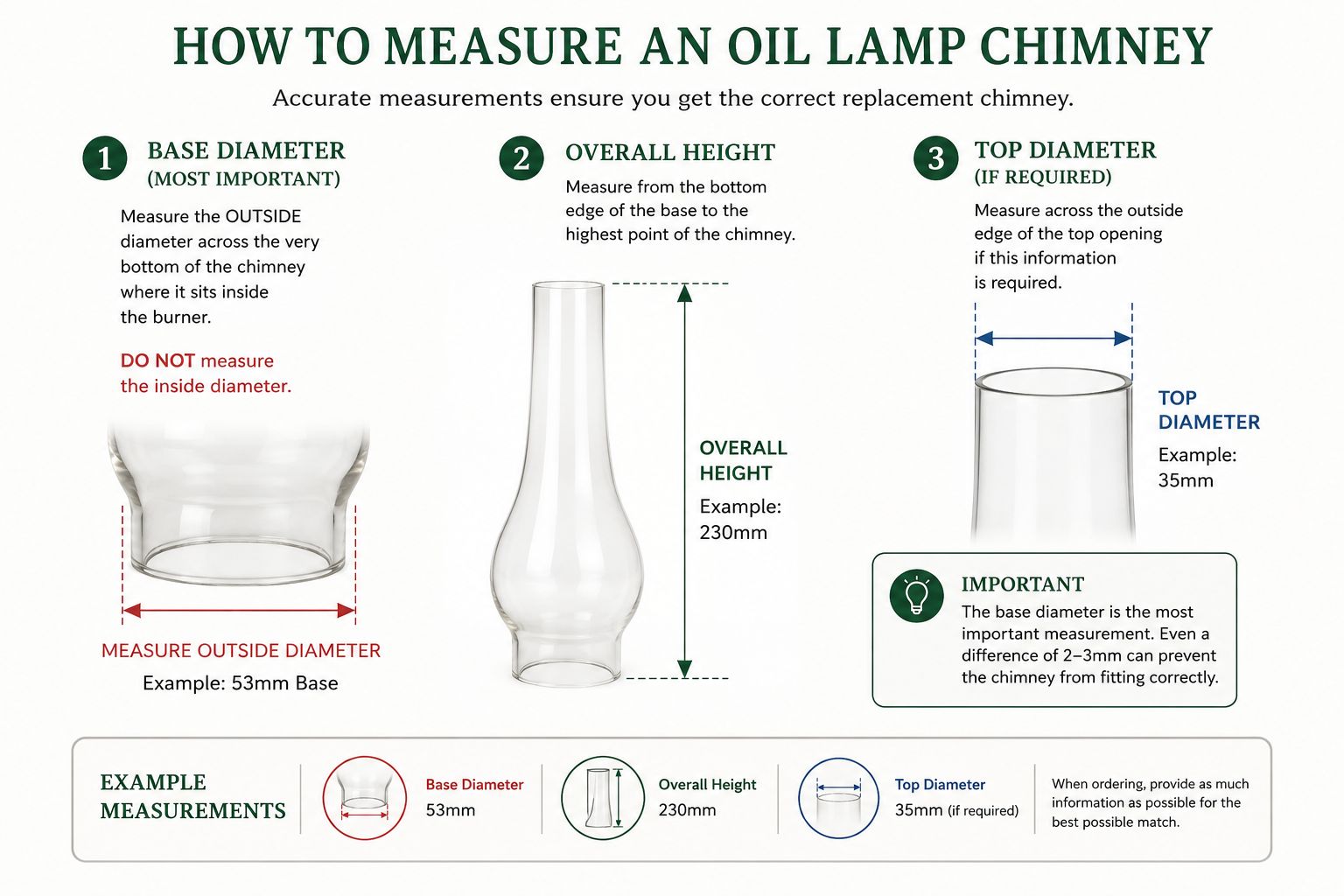
The Three Key Measurements
For most oil lamp chimneys, the most important measurements are the base diameter, overall height and, where required, the top diameter.
What You’ll Need
- A ruler or tape measure
- A vernier caliper for the most accurate measurement
- Your existing chimney, if available
If your chimney is broken, you may still be able to measure the remaining base section. If the chimney has been lost completely, we can often help identify the correct size from photographs of your lamp and burner.
Step 1 – Measure the Base Diameter
The base diameter is the most important measurement. Measure the outside diameter across the very bottom of the chimney where it sits inside the burner.
Do not measure the inside diameter.
Common base sizes include:
- 53mm base
- 64mm base
- 75mm base
- 82mm base
Even a small difference of 2–3mm can prevent the chimney from fitting correctly.
Step 2 – Measure the Overall Height
Place the chimney on a flat surface and measure from the bottom edge of the base to the highest point of the chimney. Record the measurement in millimetres.
Example: 53mm base x 230mm high
Step 3 – Identify the Shape
Oil lamp chimneys are available in many different profiles. Matching the shape is important, especially for antique, traditional and specialist lamps.
Common styles include:
- Straight
- Bulge
- Slip
- Vienna
- Kosmos
- Matador
- Duplex
- Queen Anne
- Ship lamp
- Comet tram
- Aladdin
If you are unsure which style you have, compare your chimney with the photographs on our website or send us a picture.
Step 4 – Check the Top Diameter
Most replacement chimneys are identified by the base diameter and overall height. However, some specialist lamps may also require the top opening diameter. Measure across the outside edge of the top opening if this information is required.
Common Measuring Mistakes
- Measuring the inside instead of the outside of the base
- Measuring a chipped or damaged section
- Measuring at an angle rather than straight across
- Estimating instead of using a ruler or caliper
- Confusing the base diameter with the widest part of the chimney
Don’t Have the Original Chimney?
If your chimney has been lost or completely broken, we can often identify the correct replacement from:
- A photograph of the complete lamp
- A close-up photograph of the burner
- Any manufacturer’s markings
- The measurement of the burner opening
Our experienced team regularly helps customers identify replacement chimneys for antique and vintage oil lamps.
Shop Oil Lamp Chimneys
John Moncrieff stocks one of the UK’s largest ranges of replacement oil lamp chimneys, including:
- Duplex chimneys
- Kosmos chimneys
- Matador chimneys
- Vienna chimneys
- Bulge chimneys
- Slip chimneys
- Ship lamp chimneys
- Comet tram chimneys
- Aladdin chimneys
Frequently Asked Questions
Should I measure the inside or outside of the base?
Always measure the outside diameter of the base.
Can I use a chimney that is slightly larger?
No. The chimney must fit the burner correctly. Even a small difference can result in a poor fit.
What if my chimney is broken?
If part of the base remains, you can usually still measure it. Otherwise, send us photographs of the lamp and burner and we will help identify the correct chimney.
Can you help identify antique chimneys?
Yes. Our team regularly helps customers identify replacement chimneys from photographs and measurements.
Need Advice?
If you need help selecting the correct replacement oil lamp chimney, contact the John Moncrieff team. With over 160 years of experience supplying replacement glass for traditional lighting, we are always happy to help.